
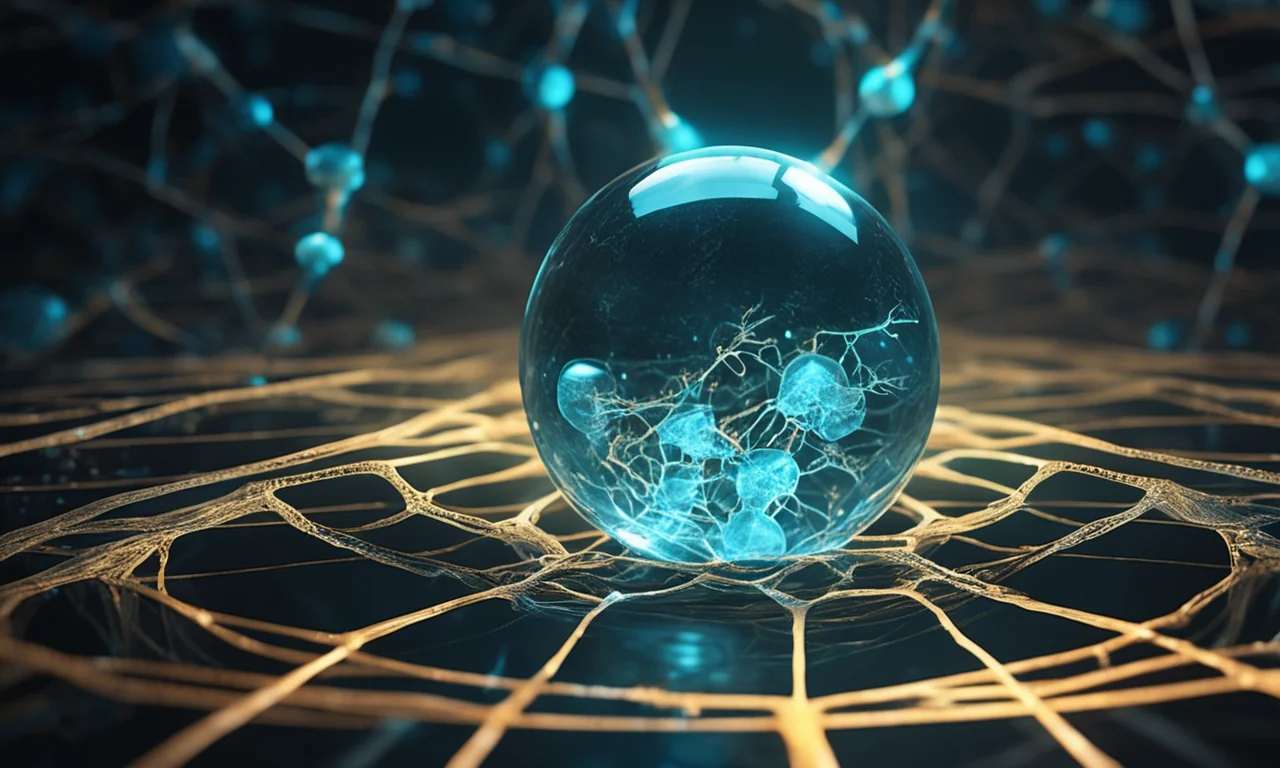
A Synthetic Cell System Redefines Boundaries of Life and Research
The latest breakthroughs in evolutionary science and synthetic biology challenge established definitions and institutional practices.
Today's Bluesky science and health discussions reveal a dynamic interplay between groundbreaking research, institutional challenges, and evolving standards of transparency. The platform's decentralized nature amplifies voices on the frontlines of discovery and debate, spotlighting the ways scientific progress is shaped by both societal forces and internal innovation.
Evolution, Innovation, and the Human Story
From evolutionary anthropology to synthetic biology, several posts explore humanity's origins and our ongoing quest to redefine life. The recent Science Magazine feature highlights how the shift to softer foods not only changed human jaw structure but also enabled new speech sounds, underscoring the interconnectedness of diet and linguistic evolution. This theme of transformation extends to the debate around the extinction of Neanderthals, as new research suggests that genetic deterioration was not the culprit, instead pointing to small population sizes as the key factor.
"Neanderthals didn't go extinct, they were genetically absorbed, is one keystroke away from. they're still here, and one of them just cut you off in traffic. You've got ~2% of them in your genome. Honestly 'I'm probably like 12%'"- @alexvagus.bsky.social (3 points)
Innovation in synthetic biology takes center stage with the SpudCell, a synthetic cell system created from non-living chemical components that mimics basic biological processes. The discussion probes the boundaries between life and artificial constructs, challenging traditional definitions of what it means to be "alive." Recognition of excellence in microbiome research is celebrated through the Noster NOSTER & Science Microbiome Prize, awarded to Yibin Zhu for his work unraveling the hidden roles of microbiota in mosquito-borne disease, and the discovery of Homo bodoensis redefines our understanding of the human evolutionary tree.
"It's the first synthetic cell system made entirely from non-living chemical components that encapsulates an entire genome. It can grow, eat, duplicate its DNA, and reproduce."- @scifri.bsky.social (5 points)
Institutions, Trust, and the Challenges of Scientific Practice
The health of scientific institutions and the importance of trust are recurring themes. The appointment of Neil Shubin as president of the National Academy of Sciences signals renewed focus on public engagement, diversity, and climate action, reflecting wider efforts to strengthen science's relevance in policy and everyday life. At the same time, a sharp critique of political interference in public health and medicine highlights the fragility of trust, especially when mainstream media narratives distract from systemic erosion of scientific authority.
"Earth is burning. The jet set is set on destruction. Shut down the whole aviation and war industries to give the future a chance."- @bombswarmearth.bsky.social (3 points)
Internationally, scientific progress faces tangible threats as the Palladin Institute in Ukraine suffered damage from missile strikes, marking a setback for biological research and underscoring the vulnerability of science in conflict zones. Meanwhile, calls for transparency expand beyond science into philosophy, as philosophy journals begin requiring conflict-of-interest disclosures—a move that aligns philosophical rigor with scientific accountability. The celebration of the 10th anniversary of Science Immunology highlights ongoing milestones in immune memory research, further illustrating the field's commitment to institutional excellence.
Environmental Frontlines and the Spread of New Knowledge
Environmental health remains central, with a study on microplastics revealing the pervasive exchange of plastic particles between ocean and atmosphere. The research details the varied distribution of polymers and their impact on marine life and human health, pointing to the urgency of addressing pollution at multiple interfaces. This concern is echoed in discussions across Bluesky, where scientific insight is not only generated but rapidly disseminated through decentralized platforms, amplifying awareness and fostering collaborative solutions.
Every community has stories worth telling professionally. - Melvin Hanna