
The shape of the Earth and health science face renewed scrutiny
The latest scientific debates challenge conventional wisdom on planetary physics and personal well-being.
Today's science and health conversations on X have veered away from tired clichés, instead offering fresh perspectives that challenge our assumptions about everything from planetary physics to personal well-being. The day's top threads reveal a restless curiosity and a contrarian streak—a collective refusal to accept the world as it appears, whether it's the Earth's shape, the power of diet, or the flexibility of our own destinies. The narrative is clear: what seems obvious is often incomplete.
The Earth: Not as Smooth as You Think
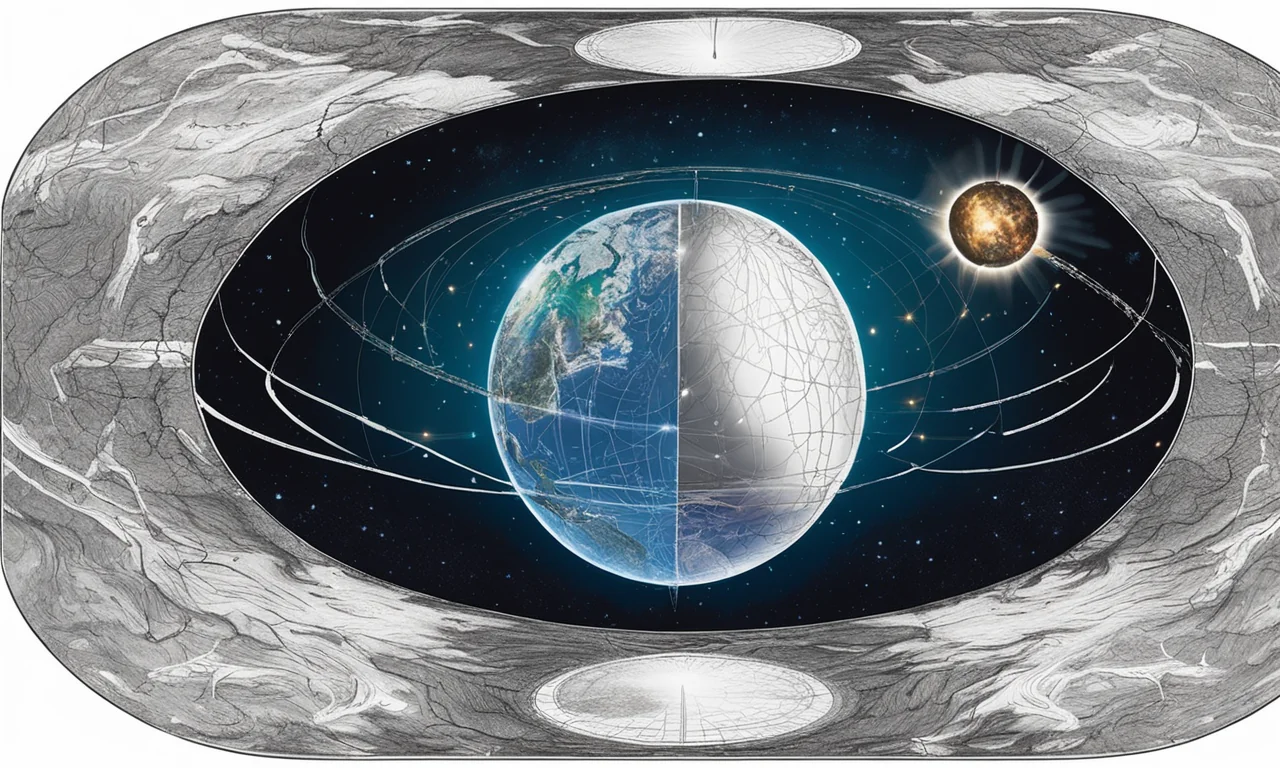
The perennial image of Earth as a perfect blue marble gets a reality check in a widely circulated thread on planetary form. Far from being a flawless sphere, our planet is actually an oblate spheroid, its equator bulging due to rapid rotation—a fact that has tangible consequences for everything from gravity variation to the precision of GPS systems. A discussion on geoid theory further underscores the unevenness caused by gravitational differences, while a look at hemispherical asymmetry reminds us that even the Earth's roundness is not distributed equally.
"Earth may look round from space, but it isn't a perfect sphere. Its true shape is slightly flattened, known as an oblate spheroid."- @SA News Channel (697 likes)
What's striking is the ripple effect of these planetary quirks on modern technology and perception. From mathematical visualizations of sine and cosine derivatives—which rely on the unit circle's perfection for clarity—to the importance of accurate spatial measurements, the day's conversations highlight how science refuses to settle for appearances. Even historical discoveries, such as Galileo's identification of Jupiter's moons, remind us that scientific progress thrives on questioning the “obvious.”
Health: Beyond Genes and Conventional Wisdom
On the health front, today's X debates expose the limits of deterministic thinking. The notion that our genes lock us into a fixed fate is directly challenged in a provocative post about epigenetics and self-agency, arguing that lifestyle and perception are the true architects of our health. This theme of personal empowerment echoes in a narrative of academic perseverance, where the support of a colleague transforms a near-quit moment into renewed scientific pursuit.
"Your body is not a fixed statue. It is a flowing river. And YOU are the one directing the flow."- @KAILASA's SPH NITHYANANDA (22 likes)
The day's nutrition threads also challenge simplistic dietary dogmas. For instance, a breakdown of chickpea chemistry moves beyond superfood hype, illustrating how raffinose fermentation produces anti-inflammatory butyrate—reminding us that health is biochemical nuance, not marketing. Meanwhile, a quote attributed to Aristotle is repurposed to promote harmony with nature, but the underlying message is clear: optimal health is found in the intersection of science and natural processes.
"If one way be better than another, that you may be sure is nature's way."- @Jacques-Yves Cousteau (137 likes)
Finally, discussions around chronic conditions—such as the importance of dementia diagnosis—emphasize the human and practical dimensions of health science. The threads today are less about passive acceptance and more about questioning, exploring, and actively shaping outcomes, whether through the lens of consciousness, diet, or diagnosis.
Journalistic duty means questioning all popular consensus. - Alex Prescott